How Tesla's $0 Marketing Strategy Works (And Why It's Cracking in 2025)
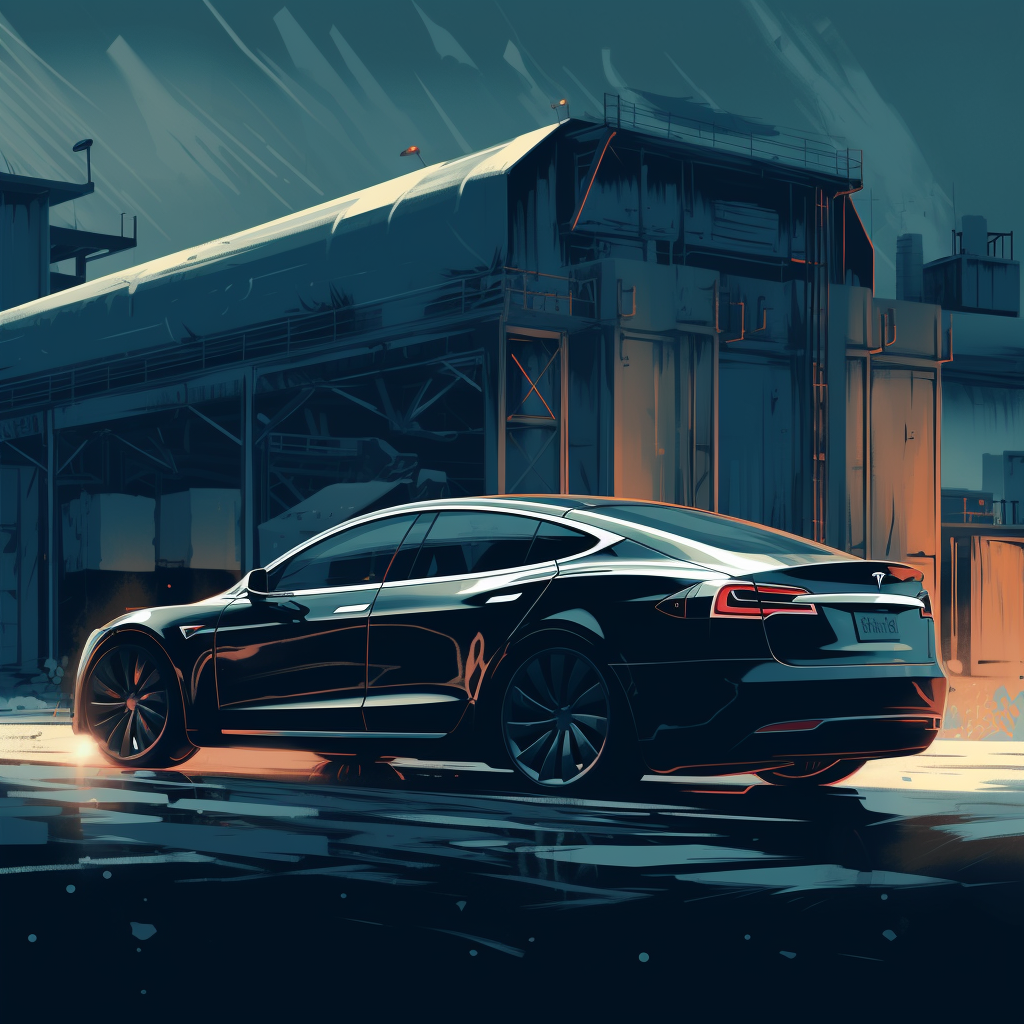
Tesla spent $0 on traditional marketing and advertising for nearly 20 years. No CMO. No ad agency. No TV commercials. Yet they became a top 10 company by market cap and the most valuable automaker on the planet.
Then 2024-2025 happened. Cybertruck deliveries. A robotaxi unveil. Increased competition from BYD, Rivian, and legacy automakers. And for the first time, Tesla started running actual ads. The $0 marketing era is officially over.
Here is the full breakdown of what made the strategy work, why it is evolving, and what marketers can learn from it.
If you are thinking about buying a Tesla, use my referral link for a referral cash bonus or Loot Box credits -- redeemable for exclusive awards. https://ts.la/howard14169
The Foundation: Why $0 Marketing Worked for 20 Years
Clear and Inspirational Mission Statement
Tesla's mission is to accelerate the world's transition to sustainable transport.
That was the mission from 2003 to 2016. Then they changed one word:
Tesla's mission is to accelerate the world's transition to sustainable energy.
One word. Transport to energy. That single change expanded Tesla's addressable market from cars to solar, batteries, grid storage, lithium refining, and utility software. It is one of the most strategically important mission statement changes in corporate history.
Why this mission drives free marketing:
- Clarity. Everyone knows what Tesla is trying to do. No ambiguity. No corporate jargon.
- Global relevance. Climate change and energy independence are issues that affect every human on the planet. The mission taps into something bigger than buying a car.
- Aspirational. People do not just buy a Tesla. They buy into the mission. That emotional connection drives word-of-mouth that no ad budget can buy.
- Differentiation. In 2003, Tesla was the only serious EV company. The mission made them the default brand for anyone interested in electric vehicles for over a decade.
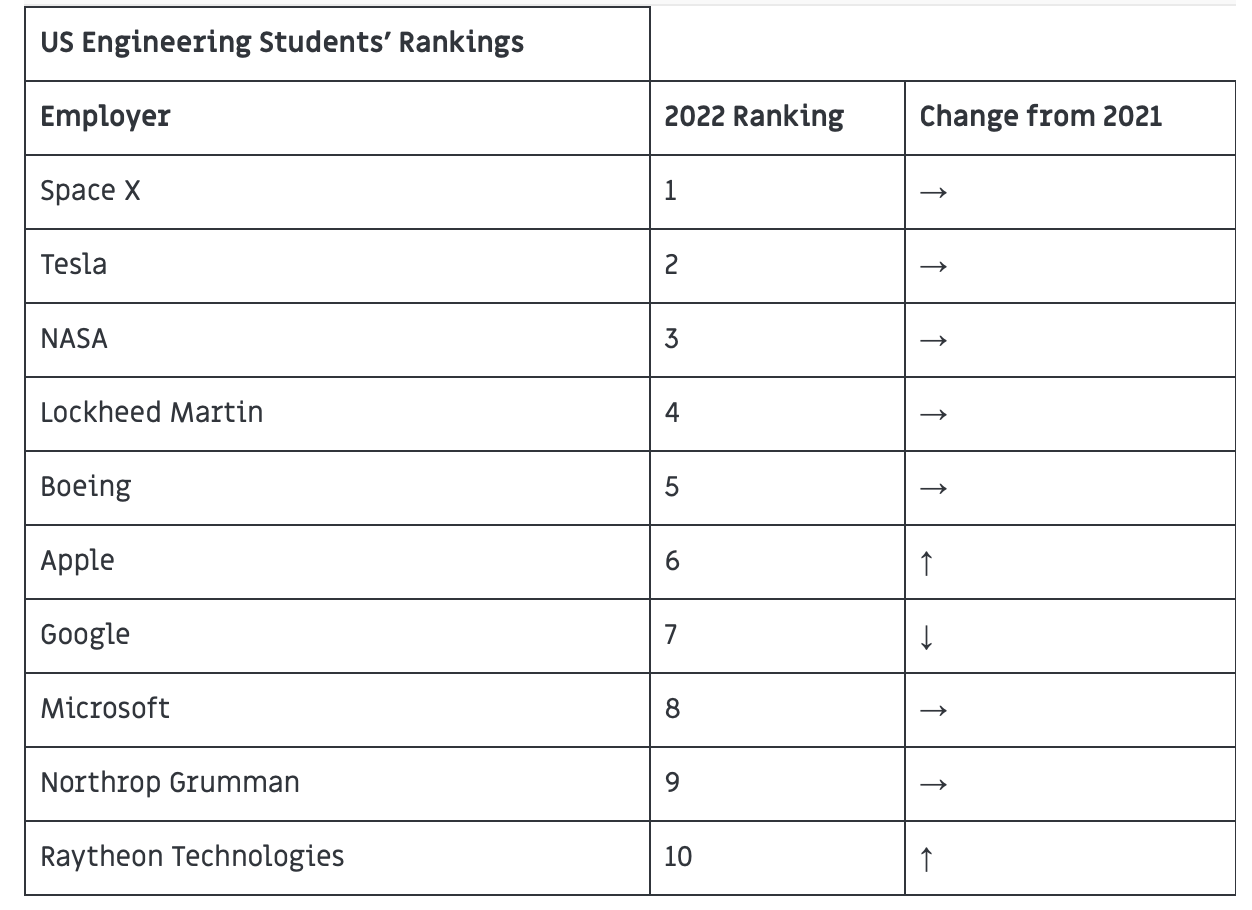
- Talent magnet. According to Universum's rankings, SpaceX and Tesla were the top 2 companies engineering students wanted to work for. The mission attracts world-class talent that builds world-class products.
Superior Products (The Real Marketing Engine)
The public tends to respond to precedents and superlatives. - Elon Musk, 2012 Caltech commencement speech
Elon has said repeatedly that products cannot just be marginally better. They need to be an order of magnitude better. That philosophy produced a product lineup that markets itself:
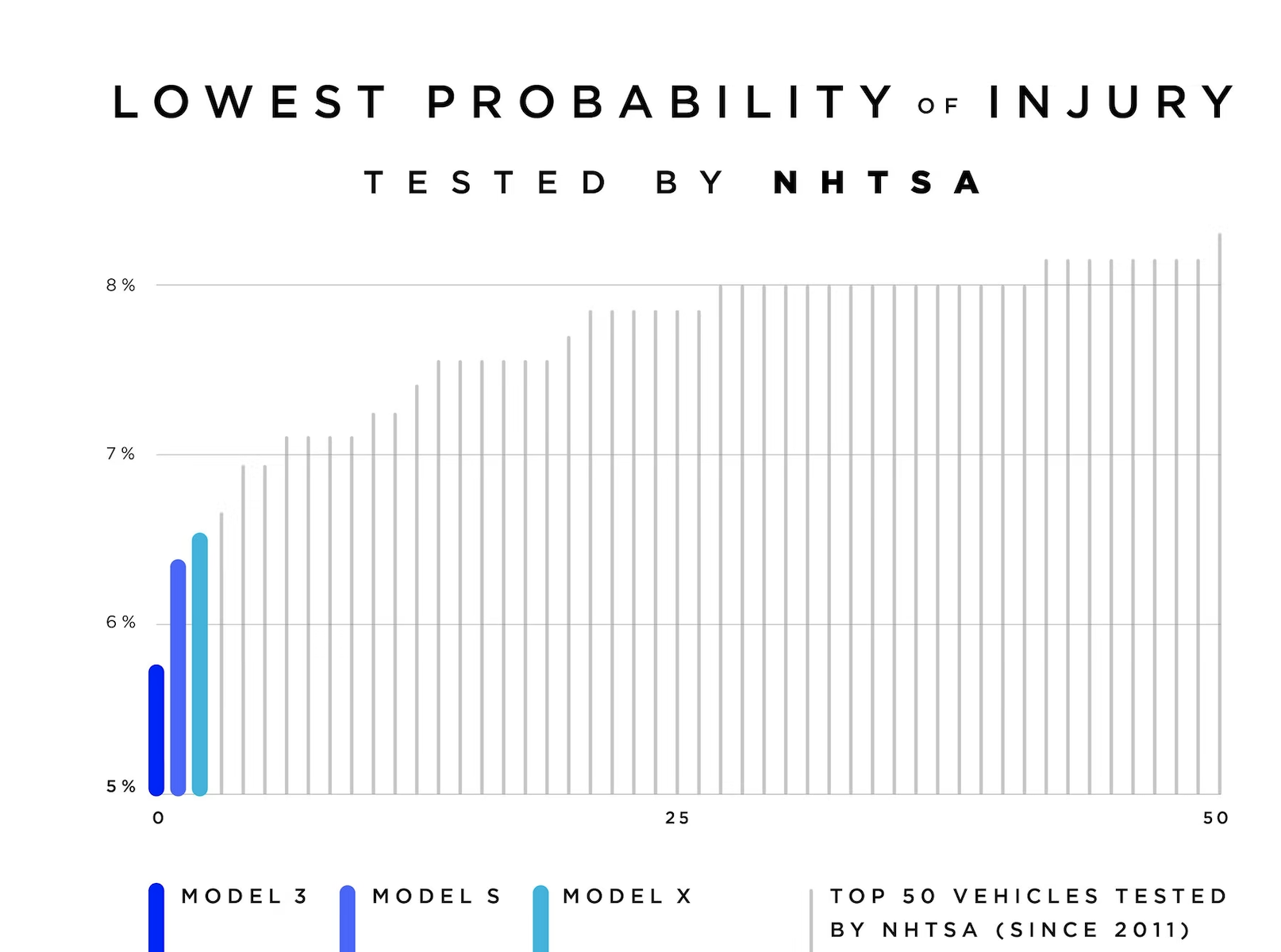
- Safest cars ever tested. Tesla vehicles hold the top safety ratings from NHTSA. Not "one of the safest." The safest.
- Performance that makes headlines. The Model S Plaid does 0-60 in under 2 seconds. That stat alone generated millions in free media coverage.
- Zero maintenance friction. No oil changes, no timing belts, no transmission fluid. Sealed battery and drivetrain. The ownership experience creates evangelists.
- Full electric = no gas bills. Charge at home from a standard outlet. Leave with a full "tank" every morning.
- Best driving assist technology. Autopilot and Full Self-Driving (FSD) -- regardless of where you stand on the technology -- generate constant media coverage, social content, and debate. Controversy is free marketing.
- Over-the-air updates. Your car gets better after you buy it. New features appear overnight. No dealership visit required. This is genuinely unprecedented in the auto industry and it gives people a reason to talk about their Tesla regularly.
- Entertainment system. Web browsing, Netflix, video games, light shows. A Tesla is not just a car. It is a gadget that happens to drive you places.
I think at Tesla it's the most fun thing you could buy ever. It's maximum fun. - Elon Musk
The marketing lesson: If your product is genuinely, objectively superior in ways that are visible and shareable, it markets itself. Every Tesla owner becomes a walking billboard because they are excited about what they own.
Exceptional Customer Experience
The traditional car buying experience is a nightmare. Haggling with dealers. Hidden fees. Pressure tactics. Uncertain pricing. Tesla eliminated all of it.
What Tesla changed:
- Online ordering. Buy a car like you buy anything else online. Configure, price, order, done. No dealer. No salesman. No haggling.
- Transparent pricing. The price on the website is the price everyone pays. No "under the table" deals. Tesla employees pay the same price. Elon's mother pays the same price.
- Home delivery. The car shows up at your house. You do not need to take a day off work to visit a dealership.
- Mobile service. Need a repair? A Tesla technician comes to you. Most services are completed in your driveway without you even being present.
- Private test drives. No salesman in the passenger seat trying to close you. Schedule online, drive alone, make your decision in peace.
- Showrooms, not dealerships. Tesla showrooms exist to educate, not sell. Staff are trained to answer questions, not pressure you into signing today.
- Flagship loaners. When your car does need service center work, Tesla provides a loaner from their lineup. If none are available, you get Uber/Lyft credits.
Why this matters for the marketing strategy: A frictionless buying experience and premium service create satisfied customers who tell their friends. Word-of-mouth from 5+ million Tesla owners on the road globally is worth more than any Super Bowl ad.
World-Class Referral and Influencer Marketing
Tesla did not just benefit from organic word-of-mouth. They built systems to amplify it.
Word of mouth at scale. There are now over 5 million Teslas on the road worldwide (up from 3.7 million when I first wrote this article). Every Tesla sold creates another advocate who shows their car to friends, family, and coworkers. The flywheel effect is real:
The more Teslas Tesla sells, the more Teslas Tesla sells. - Steven Mark Ryan, Solving the Money Problem
An entire creator economy built around one brand. This is genuinely rare. There are YouTubers who make six figures covering nothing but Tesla. Not tech broadly -- just Tesla. The list is deep: Solving the Money Problem, Tesla Daily, Farzad Mesbahi, Brighter with Herbert, Whole Mars Catalog, and hundreds of others. Name another car company where people quit their jobs to create daily content about it. You cannot.
The referral program. Tesla has used their referral program as a demand lever for years. Some of the most aggressive referral incentives in any industry:
- Free next-generation Roadsters for top referrers
- Supercharging credits
- Cybertruck raffle entries
- Loot Box credits redeemable for exclusive merchandise
- A photo of yourself launched into deep space via SpaceX (yes, this was a real reward)
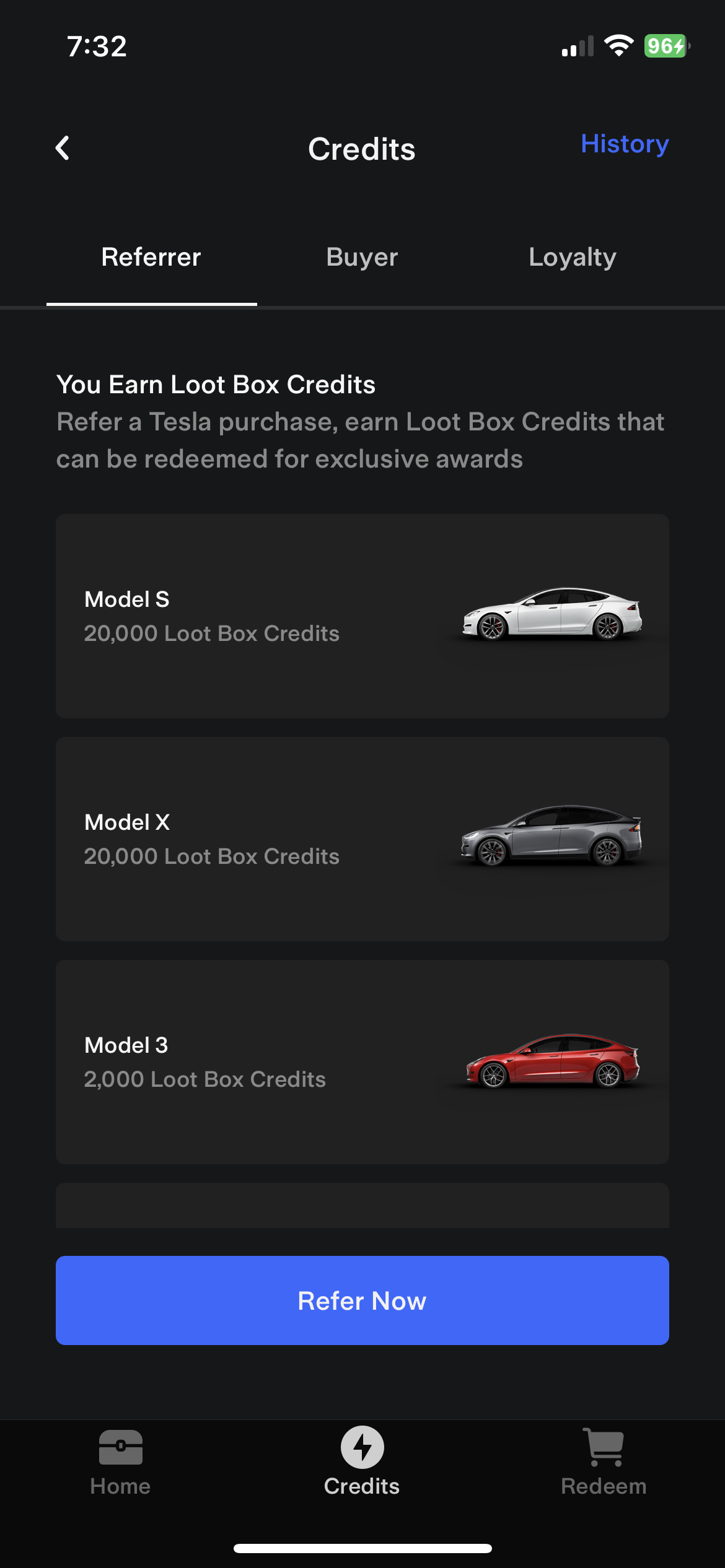
If you want those referral rewards, use my link: https://ts.la/howard14169
Branded Merchandise as a Marketing Channel
Tesla's merch game is elite. Not just t-shirts and hats -- culturally relevant, limited-edition drops that generate their own news cycles.
The highlights:
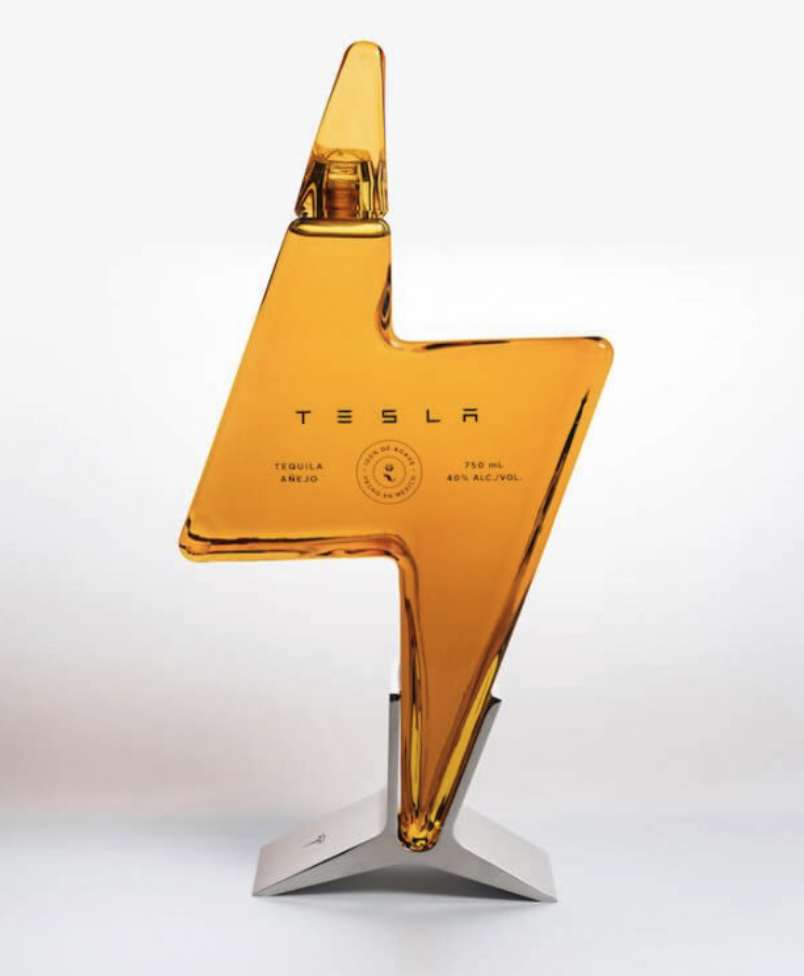
- Tesla Tequila -- Born from an Elon April Fools tweet, became a real product. Sold out instantly. The lightning bolt-shaped bottle became a collector's item.
- Short Shorts -- Priced at $69.420. A deliberate jab at Tesla short-sellers. Generated massive social media engagement and media coverage. Cost to produce: minimal. PR value: millions.

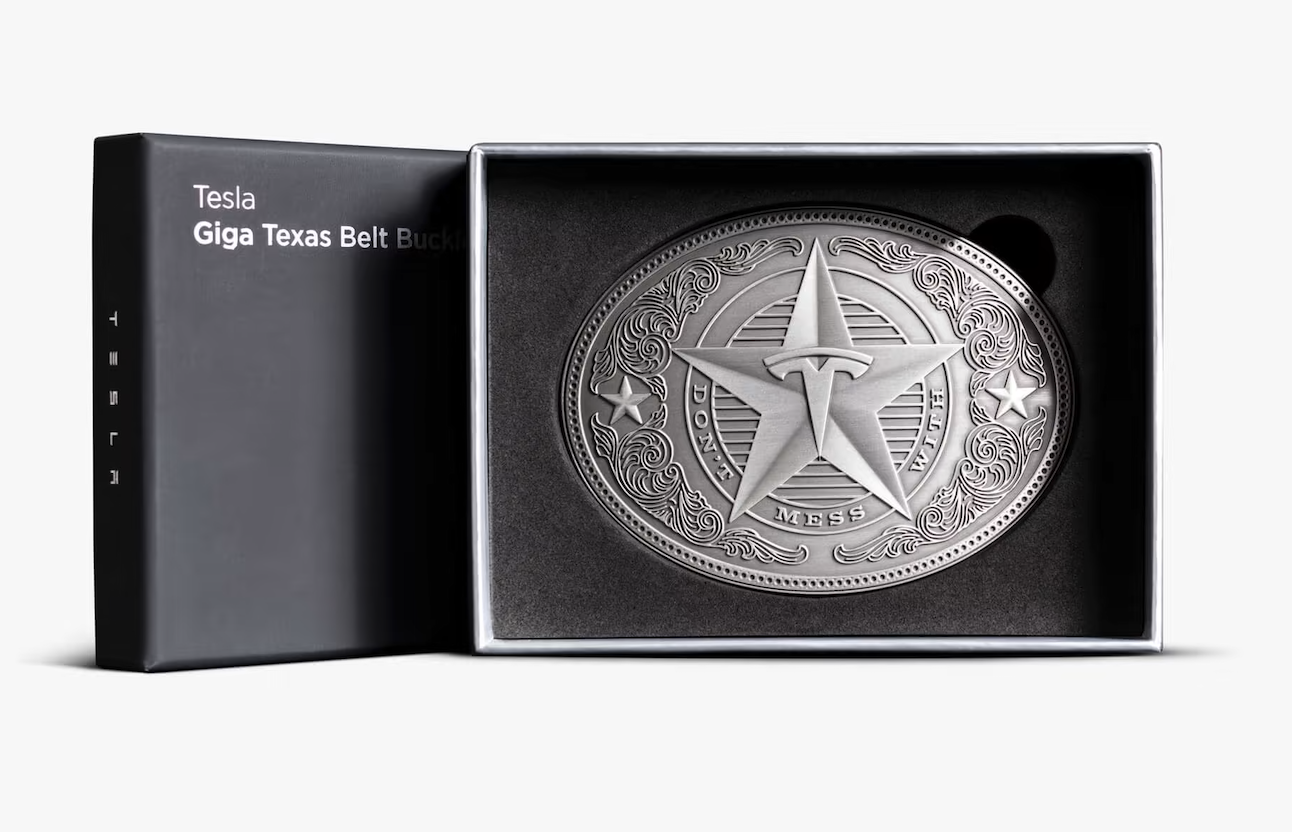
- Giga Texas Belt Buckle -- Commemorating the Austin factory and HQ. On-brand for Texas. Sold out.
- Cybertruck merchandise -- The Cybertruck design is so distinctive that every piece of merch featuring it becomes a conversation starter.
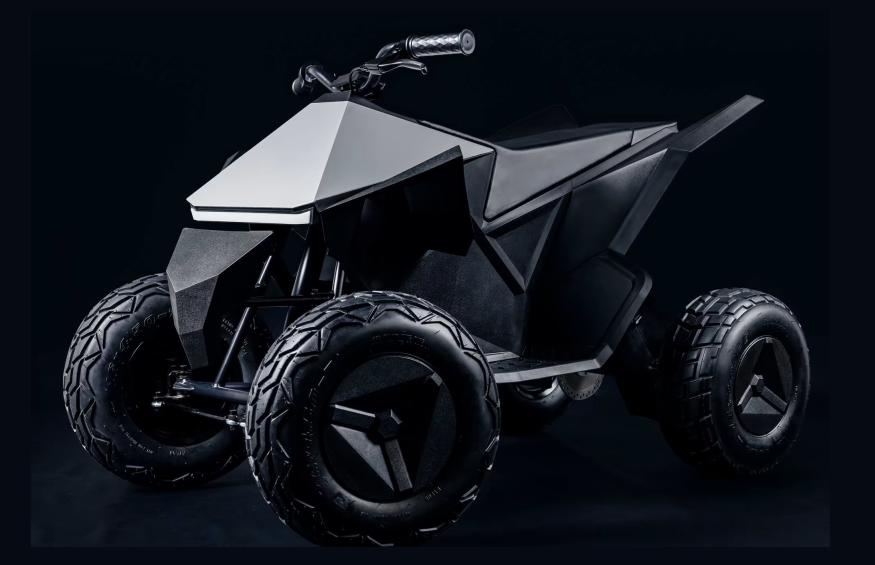
- Partnership collabs -- Hot Wheels die-cast models, Lost Surfboards Tesla surfboard, Radio Flyer Cyberquad for kids. Each partnership extends the brand into new audiences.
The Tesla Shop (shop.tesla.com) probably turns a profit. Most companies treat merch as a cost center. Tesla turned it into a revenue stream and a marketing channel simultaneously.
The Elon Musk Effect
For better or worse, Elon Musk IS Tesla's marketing department. His personal brand drives more attention than any CMO could.
How Elon generates free marketing:
- Product events. Every unveiling, every shareholder meeting, Elon is on stage. These events generate millions of impressions. The Cybertruck unveiling -- where the "unbreakable" window shattered on stage -- became one of the most viral moments in automotive history. Tesla's response? They sold a t-shirt with the cracked window graphic. Turned an embarrassment into revenue.
- X (formerly Twitter). Elon has 175M+ followers (the largest following on the platform he owns). A single post about Tesla reaches more people organically than most companies' entire annual ad budget.
- Media appearances. Podcasts, YouTube interviews, traditional media. Elon is always accessible and always candid, which keeps him permanently in the news cycle.
The 2024-2025 Elon factor -- the double-edged sword. Here is what changed: Elon's political involvement and controversial statements have polarized the Tesla brand. Some customers are buying Teslas specifically because of Elon. Others are actively avoiding the brand because of him. Tesla's brand perception scores dropped in multiple markets. This is the risk of tying your company's identity so tightly to one person. When that person is universally admired, it is free marketing gold. When that person becomes polarizing, it becomes a brand liability.
For more on how personal brand drives business outcomes, see the interesting Elon Musk facts deep dive.
What Changed: The Cybertruck, Robotaxi, and the End of $0 Marketing
Cybertruck: Marketing Masterclass or Cautionary Tale?
The Cybertruck is the most divisive vehicle design in modern automotive history. You either love it or you think it is an abomination. There is no middle ground. And that is exactly what makes it marketing genius.
What worked:
- Unmistakable design. Every Cybertruck on the road generates stares, photos, and conversations. It is the most photographable vehicle since the DeLorean.
- Social media content machine. Cybertruck content -- both positive and negative -- dominated automotive social media throughout 2024. The memes alone generated billions of impressions.
- Waitlist demand. Over 2 million pre-orders before a single delivery. That level of pre-launch demand is unprecedented for a vehicle in this price range.
What did not work:
- Delivery delays. Originally unveiled in 2019, first deliveries did not happen until late 2023. The multi-year gap tested buyer patience and gave competitors time to launch alternatives.
- Price increases. The originally announced $39,999 starting price never materialized. Actual starting price landed above $60,000. This created backlash among the mass-market buyers who placed early reservations.
- Build quality issues. Early Cybertruck deliveries had panel gap issues, rust spots on stainless steel, and other quality concerns that became viral social content -- this time negative.
- Stainless steel challenges. The distinctive exterior requires different care than traditional paint. Some owners were not prepared for this, leading to visible wear that got amplified on social media.
The marketing takeaway: Polarizing design generates attention. But attention without execution (on-time delivery, accurate pricing, build quality) can turn advocates into critics.
Robotaxi: The Biggest Marketing Bet in Tesla's History
In October 2024, Tesla unveiled the "Cybercab" -- their dedicated robotaxi vehicle with no steering wheel and no pedals. This is the single biggest bet Tesla has ever made, and it is fundamentally a marketing event disguised as a product launch.
Why the robotaxi matters for Tesla's marketing:
- Narrative shift. Tesla is repositioning from "electric car company" to "autonomy and AI company." This changes the brand story entirely.
- Valuation driver. A huge portion of Tesla's market cap is based on the promise of autonomous driving and a robotaxi network. Every FSD update, every robotaxi event, is marketing directed at investors as much as consumers.
- Competitor pressure. Waymo is already operating commercial robotaxis in multiple US cities. Tesla needed to show progress or risk losing the autonomy narrative entirely.
The skeptic's view: Tesla has promised Full Self-Driving "next year" every year since 2016. The robotaxi was originally promised for 2020. Credibility on timelines is low. But every announcement still generates massive media coverage, which is the point from a marketing perspective.
Tesla Starts Running Ads (Yes, Really)
At the 2023 shareholder meeting, Elon said something nobody expected:
We will try a little advertising and see how it goes.
By 2024, Tesla was running actual ads. Not the Super Bowl blockbuster type -- more like informational content showing vehicle features, safety ratings, and ownership benefits. Low-production, educational, and targeted primarily at audiences who may not follow Tesla closely.
Why now?
- Competition intensified. BYD surpassed Tesla in total EV sales globally in Q4 2024. Hyundai, Kia, BMW, Mercedes, and others are shipping competitive EVs. The "only serious EV option" positioning is gone.
- Market expansion requires awareness. Tesla's early adopter market is saturated. The next wave of buyers -- mainstream consumers who do not follow tech news -- need traditional marketing to learn about Tesla's advantages.
- Brand perception issues. Elon's polarizing public persona means Tesla can no longer rely solely on his personal brand for positive attention. The ads let the product speak without the CEO baggage.
- Price competition. With more EV options at every price point, Tesla needs to actively communicate its value proposition rather than assuming everyone already knows it.
What the ads look like: Short videos highlighting safety ratings, total cost of ownership versus gas cars, FSD capabilities, and customer testimonials. Distributed on YouTube, social media, and streaming platforms. Very different from traditional auto ads -- no dramatic music, no winding mountain roads. Just straightforward information.
Advertising needs to be as close to content as possible. If advertising is informative and entertaining, then it can start to approach content. - Elon Musk
Marketing lesson: Even the best product in the world eventually needs advertising when competition catches up and the market expands beyond early adopters.
What Marketers Can Learn from Tesla's Strategy
Whether you are building a startup or running a Fortune 500 brand, Tesla's marketing playbook has transferable lessons:
1. Product is the best marketing. If your product is genuinely 10x better, customers become your marketing department. Invest in product quality before ad spend.
2. Mission-driven brands build loyalty. People do not just buy Tesla cars. They join a movement. A clear, aspirational mission creates emotional connections that transactional marketing cannot.
3. Turn customers into advocates. Referral programs, memorable ownership experiences, and shareable product design turn every customer into a marketer.
4. Embrace controversy strategically. The Cybertruck window breaking, the Short Shorts, the Tequila -- Tesla leans into controversy and humor instead of running from it. Attention is attention.
5. Build owned distribution. Elon's X following, Tesla's email list, the creator ecosystem -- these are owned channels that do not depend on ad platforms or algorithms.
6. Know when to evolve. The $0 strategy worked for 20 years. But when the competitive landscape changed, Tesla adapted. The best strategy is the one that fits the current environment, not the one that worked last decade.
7. Watch the founder risk. A company's brand tied to one person is powerful but fragile. When the person thrives, the brand thrives. When the person stumbles, the brand takes damage. Diversifying brand identity beyond the founder is insurance.
In Conclusion
Tesla's $0 marketing strategy is one of the most studied and admired in business history. It proved that a superior product, a clear mission, and authentic customer advocacy can build a $500B+ company without traditional advertising.
But it also proved that no strategy lasts forever. Competition, market maturation, brand perception shifts, and the sheer scale of reaching mainstream consumers eventually forced Tesla to evolve.
The summary:
- A clear, aspirational mission statement
- Products that are objectively and visibly superior
- Customer experiences that create advocates
- Referral and influencer ecosystems that amplify word-of-mouth
- A founder who generates constant attention (with the risks that entails)
- The willingness to start advertising when the market demands it
Not every company can replicate Tesla's exact playbook. But points 1-4 are available to any business willing to invest in product quality and customer experience over ad spend. Start there.
Related articles: Interesting Elon Musk Facts · How to Promote SEO Content · MrBeast Facts
Author
Want more like this?
I write about AI implementation, automation, and growth marketing. No hype.