How I Use AI SEO to Get on the First Page of Google (With Examples)

I've used AI to generate SEO content across multiple sites. One approach flopped hard—6 clicks total. Another hit page 1 of Google within weeks. The difference wasn't the AI tool. It was the preparation, prompting, and quality control around it.
The Experiment: Two Sites, Two Approaches
I ran the same experiment on two different websites with wildly different results. Here's the raw data so you can see exactly what worked and what didn't.
Site 1: The Lazy Approach (Failed)
Website: HEDocks.com
Domain age: 9 years
AI content generated: 34 articles
AI tool: ChatGPT 3.0
Prompt approach: Basic. "Write an article about [topic]." No context, no examples, no constraints.
Human editing: Zero. Copy and paste straight from ChatGPT.
SEO research: Minimal. I looked up a few transactional keywords related to "buying an Apple Watch stand." Trusted ChatGPT to handle the rest.
Originality.ai score: 100% AI detected
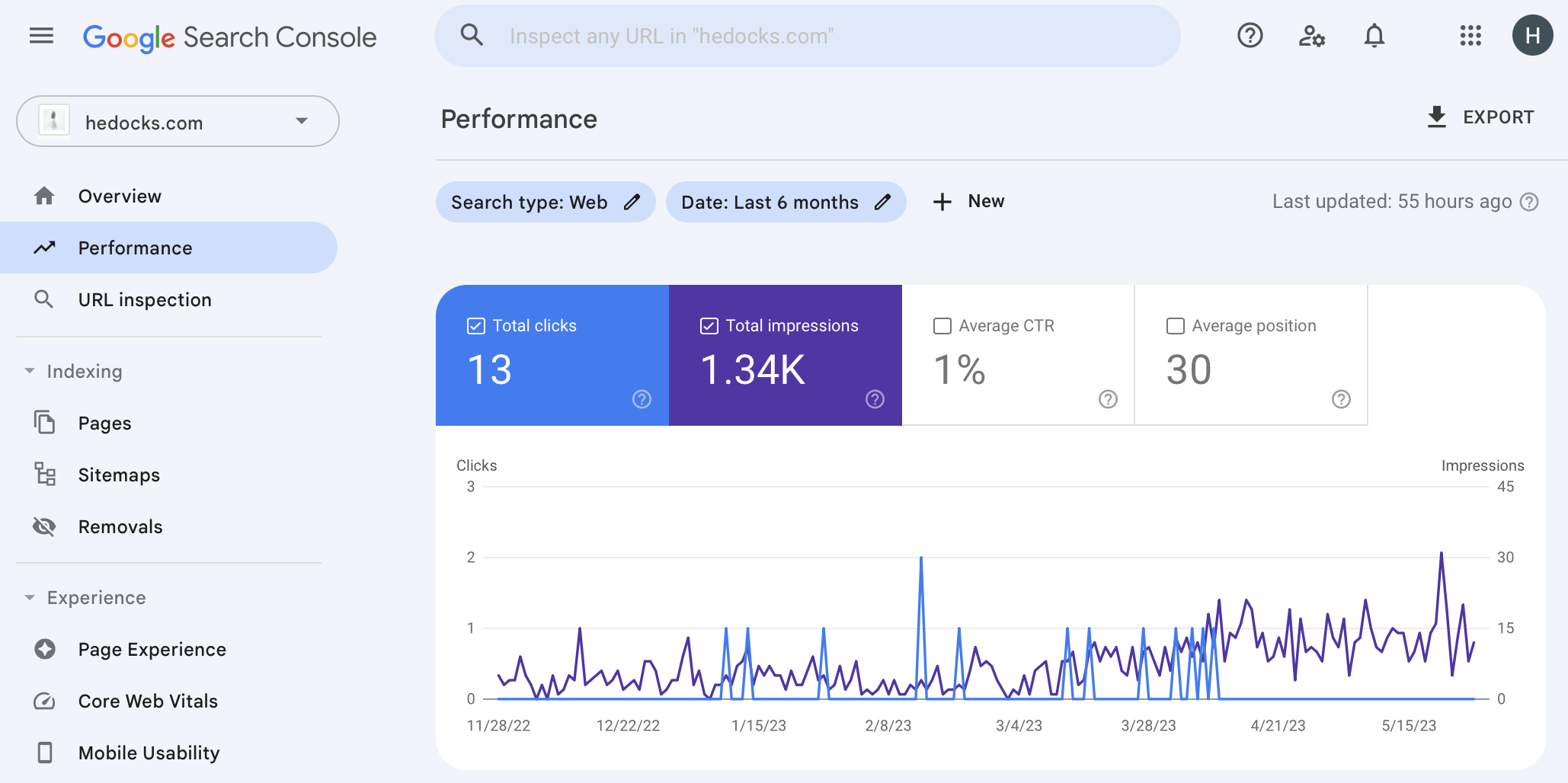
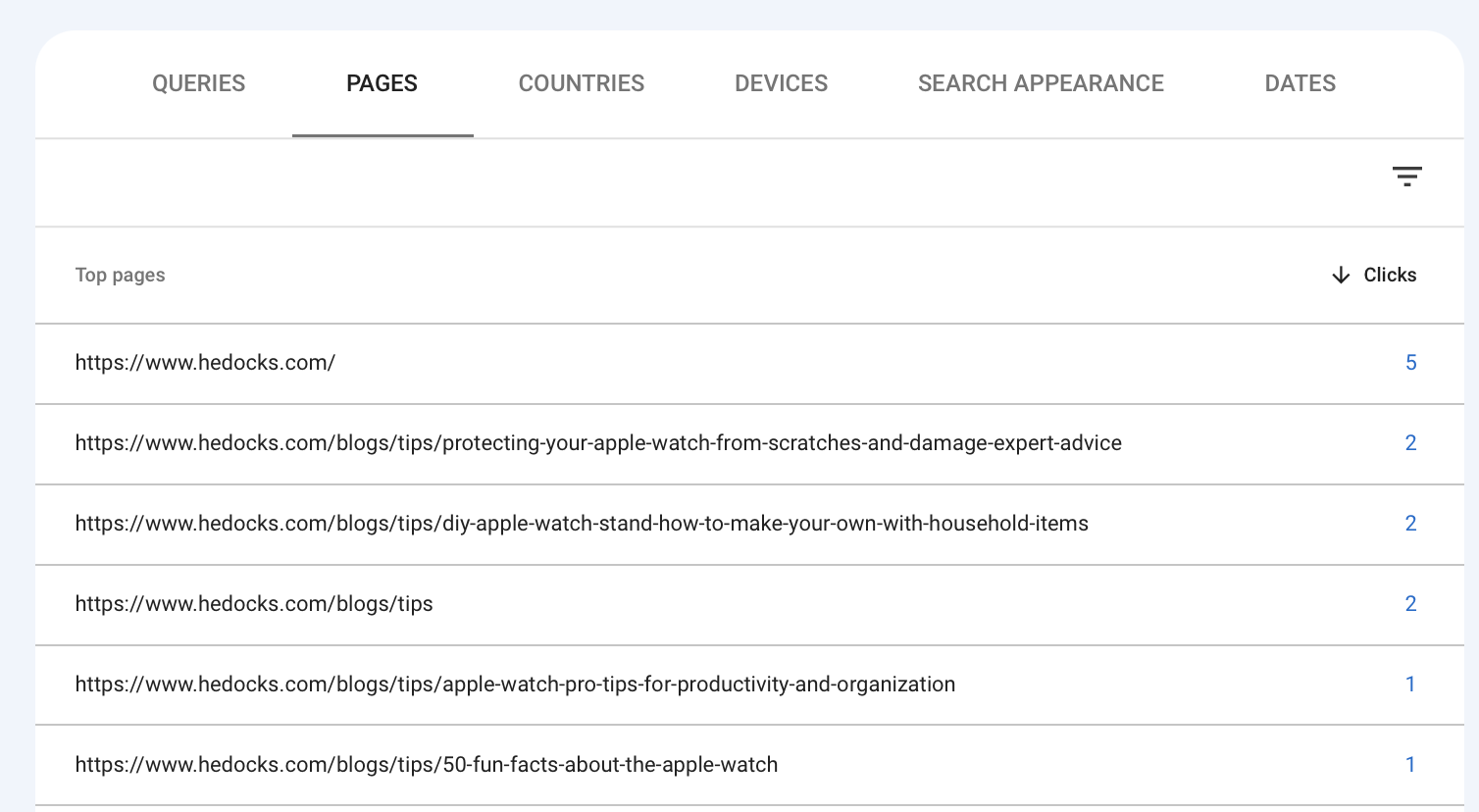
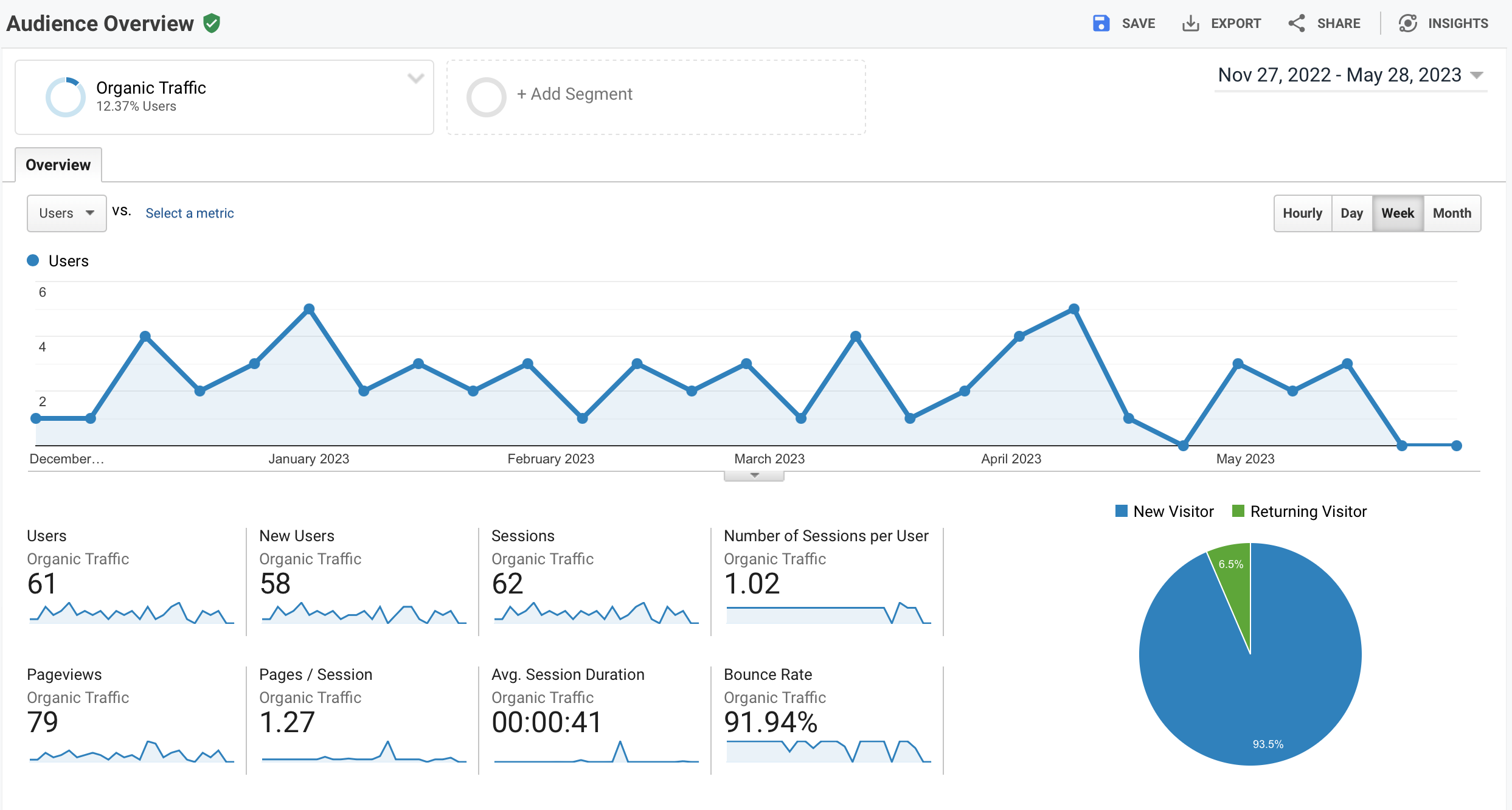
Results: Google Search Console showed improved impressions over 6 months—but only 13 total clicks. Drilling into just the AI articles: 6 clicks. That's 34 articles producing 6 clicks over 6 months.
What went wrong:
- No keyword research
- No prompt engineering
- No editing
- No internal links
- No images or media
- Just raw ChatGPT output dumped onto pages
Google saw it as thin, unhelpful content—because it was.
Site 2: The Prepared Approach (Worked)
Website: SizzlePop.AI
Domain age: 8 months (brand new)
AI content generated: 1 article — How to Write Killer Prompts for AI-Generated T-Shirt Designs
AI tool: ChatGPT 4.0 + Midjourney V5 for images
Prompt approach: Fed ChatGPT a rough outline, example articles in my writing style, and technical documentation for Stable Diffusion.
Human editing: None, but the prompt prep was extensive.
SEO research: Full keyword research. Target phrase: "AI Prompt for T Shirt Designs."
Originality.ai score: 100% AI detected
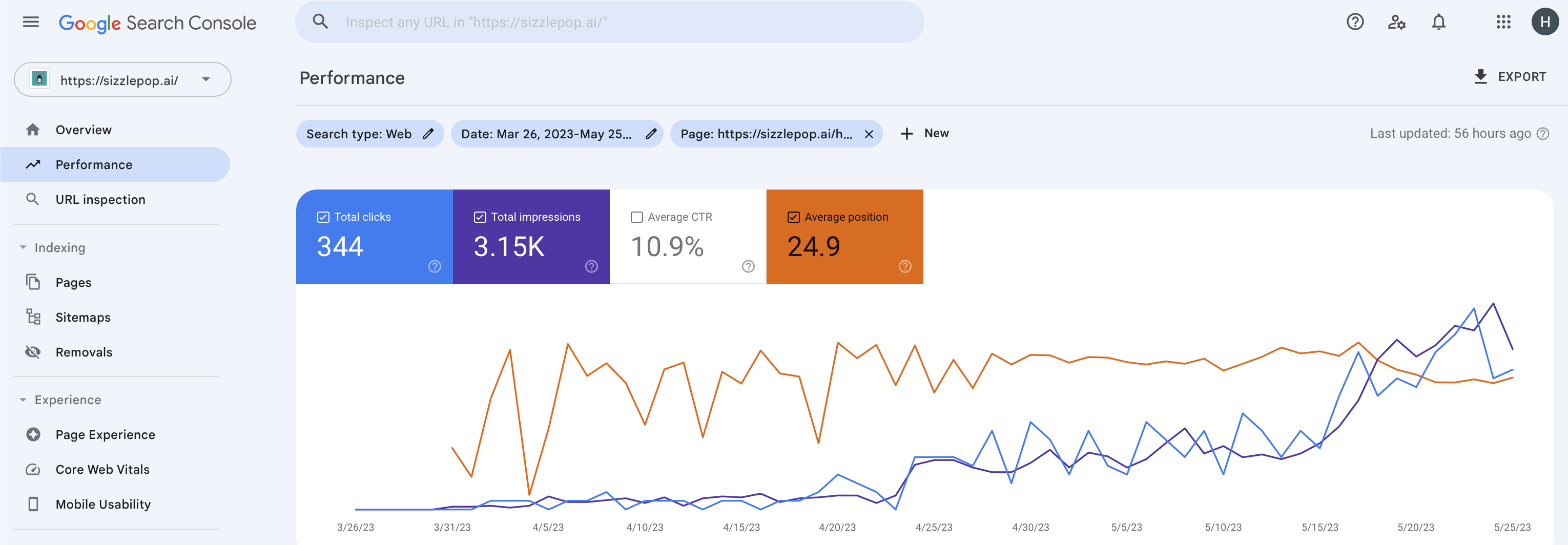
Results: Page 1 ranking for target keyword and dozens of related phrases. Consistent organic traffic from a single article on an 8-month-old domain.
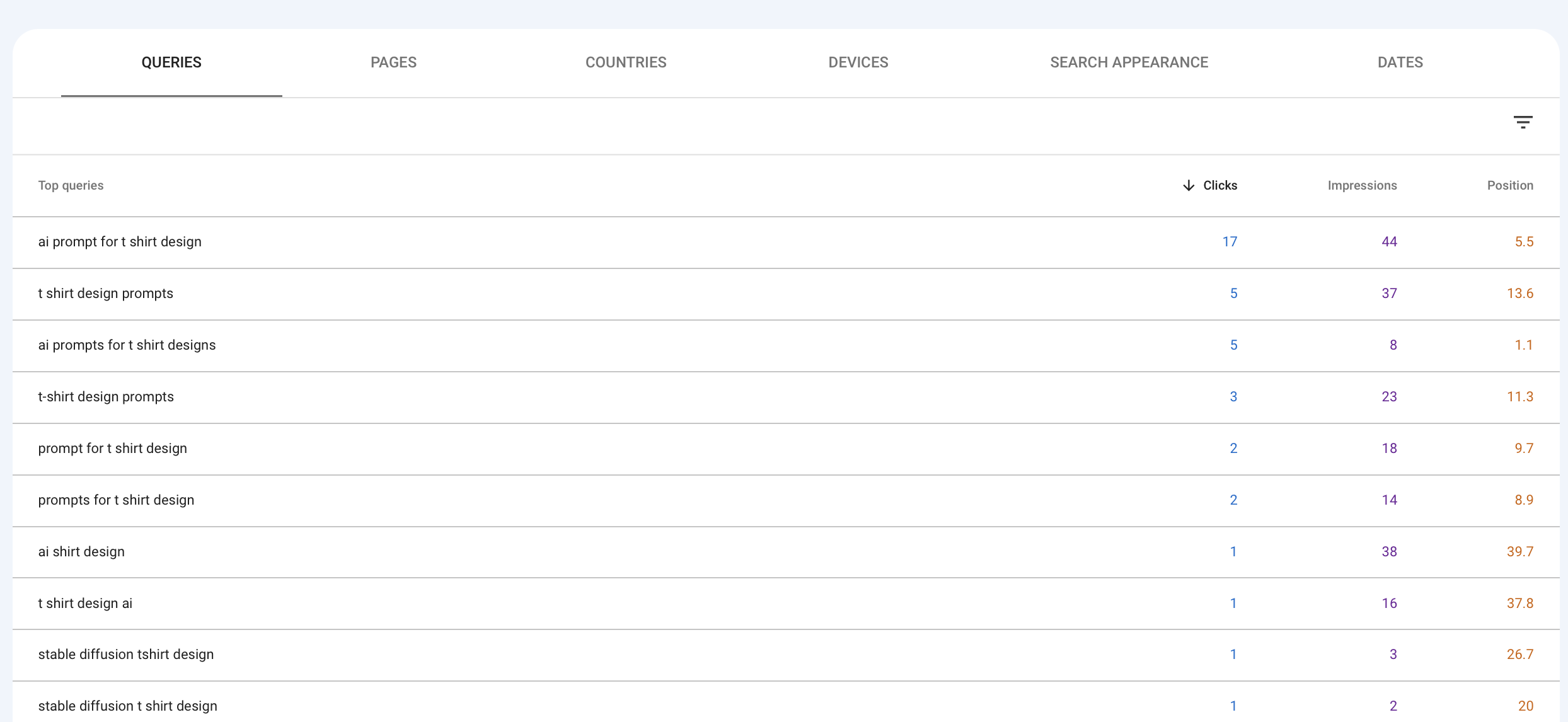
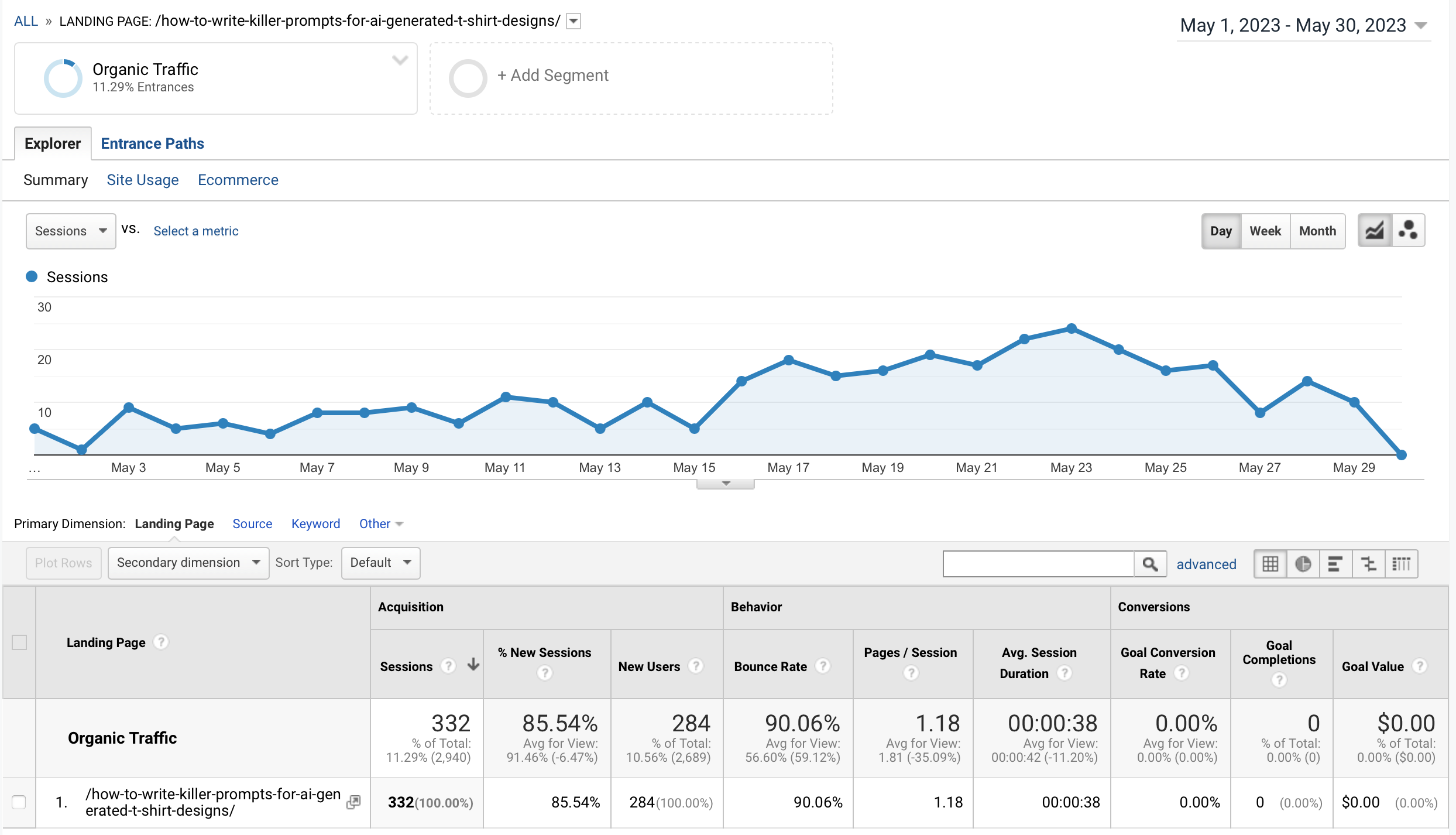
What worked: Keyword research identified a real opportunity. The prompt included context (outline, examples, technical docs). The output was structured, comprehensive, and genuinely useful for the target audience.
The 5-Step AI SEO Process That Works
Based on these experiments and everything I've tested since, here's the process I use now:
Step 1: Keyword Research First
Use Ahrefs, Semrush, or even Google's "People also ask" to find keywords with real search volume and manageable difficulty. Don't let AI pick your topics.
Target: Keywords with 100-10,000 monthly searches and a keyword difficulty under 40. This is where AI content can compete.
Step 2: Study the Top 5 Results
Search your target keyword. Read the top 5 results. Note:
- What format are they using? (listicle, guide, tutorial)
- How long are they? (word count)
- What subtopics do they cover?
- What's missing?
Your AI-generated article needs to match or beat every dimension.
Step 3: Build a Detailed Prompt
This is where most people fail. A good AI SEO prompt includes:
- Target keyword and related keywords — "Target: 'AI prompt for t-shirt designs.' Also include: 'AI t-shirt generator,' 'Midjourney t-shirt prompts,' 'stable diffusion clothing designs.'"
- Outline — Provide H2 and H3 headers. Don't let the AI decide structure.
- Tone examples — Paste 2-3 paragraphs from your existing content. Say "Match this tone."
- Specific data or sources — Feed the AI statistics, quotes, or documentation to reference.
- Constraints — "2,500+ words. Include 5+ examples. Add a FAQ section. No generic advice."
For more on crafting effective prompts, check out my best practices for ChatGPT prompts.
Step 4: Review and Enhance
Even with a great prompt, the raw output needs work:
- Add real examples. AI generates generic ones. Replace with specific tools, dollar amounts, and results you've actually seen.
- Add internal links. Link to 3-5 other pages on your site.
- Add external links. Reference authoritative sources (studies, documentation, expert quotes).
- Add images, screenshots, or videos. AI-only text underperforms multimedia content.
- Cut AI filler. Remove phrases like "in the ever-evolving world of" or "it's important to note that."
Step 5: Optimize Technical SEO
- Meta title under 60 characters with target keyword
- Meta description under 160 characters with a clear value proposition
- URL slug with target keyword (3-5 words)
- Schema markup (Article or HowTo)
- Image alt text with descriptive keywords
Does Google Penalize AI Content?
No. Google penalizes thin, unhelpful content regardless of how it was created. Their official position is clear: the focus is on content quality, not content origin.
What counts as "thin" content Google will suppress:
- Under 500 words with no unique value
- No internal or external links — signals the content exists in isolation
- No original data, examples, or analysis — just repackaged common knowledge
- Poor structure — walls of text, no headings, no formatting
- Duplicate or near-duplicate of content already ranking
Read more about how to avoid spam detection on generated AI content.
The Best AI Tools for SEO Writing in 2025
The landscape has shifted dramatically since the early ChatGPT days. Here's what actually matters:
General-purpose AI (best for most people):
- ChatGPT (GPT-4o) — $20/mo. Best for general content with custom GPTs for SEO workflows.
- Claude (Opus/Sonnet) — $20/mo. Handles longer documents and more nuanced writing. Strong at following style guides.
- Gemini 1.5 Pro — Free tier available. 1M token context window for processing massive research documents.
Dedicated AI SEO tools:
- Surfer SEO — $89/mo. Real-time content scoring against top-ranking pages. Tells you exactly which keywords and topics to include.
- Jasper.ai — $49/mo. Built for marketing teams. Templates for every content type.
- Frase.io — $15/mo. Best value. SERP analysis + AI writing in one tool.
- Clearscope — $170/mo. Enterprise-grade content optimization. Used by Shopify, HubSpot, and Intuit.
My take: The dedicated tools are glorified wrappers around the same foundation models. The real value is in their SERP analysis and keyword optimization features, not the AI writing itself. Use Claude or ChatGPT for the writing. Use Surfer or Frase for the keyword optimization layer.
If you want to build your own SEO tools instead of paying for wrappers, see my guide on how to build AI SEO GPTs.
Is AI Copy Bad for SEO?
AI copy is bad for SEO the same way a power drill is bad for carpentry—if you don't know what you're building. The tool amplifies your existing skill level.
If you know SEO fundamentals: AI lets you produce 5-10x more content without sacrificing quality. You know what keywords to target, how to structure articles, and what "helpful" means.
If you don't know SEO: AI lets you produce 5-10x more bad content faster. More bad content doesn't help. It can actively hurt your site through Google's helpful content system, which evaluates your entire domain.
In Conclusion
AI SEO works when you treat AI as a writing assistant, not a replacement for strategy. Do the keyword research. Build detailed prompts with real context. Review and enhance every piece with original examples, data, and links. The sites winning with AI content in 2025 aren't publishing more—they're publishing smarter.
Related articles: How to Build AI SEO GPTs · How to Avoid Spam Detection on AI Content · ChatGPT SEO Predictions Revisited
Author

Want more like this?
I write about AI implementation, automation, and growth marketing. No hype.